
The Florida Permit Maze: How to Protect Your Home and Your Investment
If you’ve lived in Florida for any length of time, you know that home improvements are more than just choosing the right colors or materials. Whether you are in Indian River County, Martin County, or St. Lucie County, you are entering a complex legal and bureaucratic system known as the Florida Permitting Process.
At DB Home Improvements, we’ve been navigating these waters since 2005. I’ve had many neighbors ask me how this system actually works. The truth is, the paperwork is just as important as the installation. If the paperwork is wrong, your project can come to a standstill, or worse, leave you with a legal lien on your property.
Step 1: Solving the Jurisdiction Puzzle
The first mistake people make is heading to the wrong building department. In our neck of the woods, municipalities have their own “sections.” For example, Martin County covers Stuart and Jensen Beach, but it doesn’t cover Sewall’s Point—they have their own municipality where the police actually come up your driveway to inspect the job.
The same goes for St. Lucie County versus the cities of Port St. Lucie or Fort Pierce. To save yourself a trip, look at your Property Tax ID. It will list your specific Jurisdiction. Don’t rely on your tax bill alone, because taxes always go to the county first. Find that jurisdiction tag, and you’ll know exactly which door to walk through.
Step 2: The “Technique-Sensitive” Online Process
Most departments, like the Indian River County Building Department, and Marin County Building Department have moved to online permitting. While it’s much faster than waiting for hours in a physical line, it is “technique-sensitive.” Getting the initial stages right is critical. Whether you are doing a complex window install or a basic Hardie siding project, the online portal is where the journey begins.
Step 3: The Truth About the Notice of Commencement (NOC)
One of the most misunderstood documents in Florida is the Notice of Commencement. People often view it as just another form, but it is actually a self-expiring lien on your house. It notifies the world that work is happening.
If you are acting as an Owner-Builder, you actually have to fill yourself in as both the builder and the owner—essentially notifying yourself that you’re working on your own house! It sounds silly, but it’s the law. More importantly, without a recorded NOC, a supplier (like a window or siding company) has the right to place a mechanics lien on your house, even if you’ve already paid your contractor. This is why we handle this for you. We ensure the NOC is recorded at the courthouse and stamped before a single nail is driven.
Step 4: Standalone Contracting vs. The “Snake”
This is where DB Home Improvements stands apart. In this industry, there is a dangerous trend I call the “snake eating its tail.” This is when a contractor uses your deposit to finish their last contract. It’s a cycle that leads to abandoned jobs and financial headaches for homeowners.
We practice Standalone Contracting. We don’t need your money to finish someone else’s house. We are financially solid, and we do things the right way because it’s the law—and because it’s the only way to treat a neighbor. We are state certified Licence number CRC1330776
Step 5: The “Once and Done” Siding Solution
When we talk about siding in Vero Beach, we talk about Hardie board siding (shiplap siding). We love this product because it is “once and done.” It comes with a 30-year warranty that is fantastic for the Florida climate.
But even the best product fails if it isn’t inspected. For a Hardie install, you need three specific stops from the county:
- The Dry-in Inspection
- The In-progress Inspection (while it’s going up)
- The Final Inspection
Step 6: The “Permit Bag” (Your Insurance Policy)
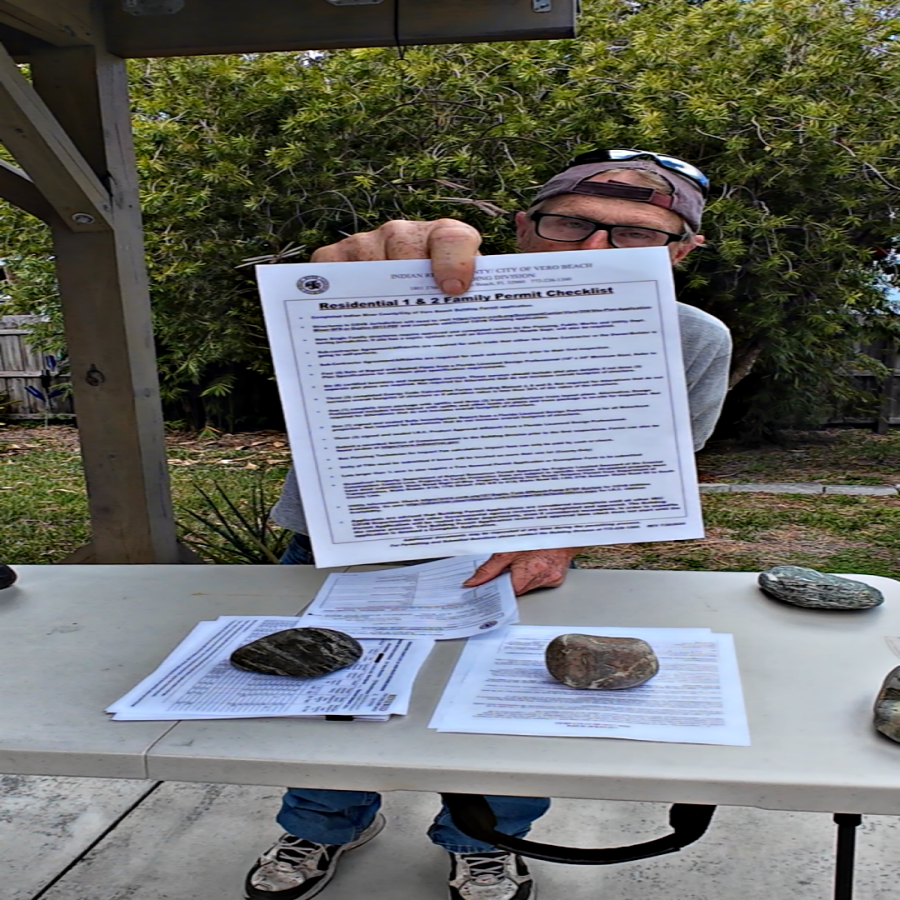
Finally, when the permit is issued, it goes into a Ziploc bag that hangs out front. This isn’t just for show. That bag contains your sign-off sheet, your reviewed house maps, and your stamped engineering.
I tell all my clients: Don’t lose this stuff. We rely on technology, but the physical, signed-off permit is your ultimate protection. I once helped a client who couldn’t get a new permit because of an open “concrete repair” permit from 1982! She reached into her file cabinet, pulled out the signed paper from 40 years ago, and we saved the project.
Professional Results from a Local Expert
At DB Home Improvements, we do the work once, and we do it right. If you can’t take our word for it because of your past, take it from our customer testimonials, click the links directly above. If you’re ready to upgrade your home with a team that understands the local laws and the best products for the Treasure Coast, give us a call.
Frequently Asked Questions (FAQ) for Vero Beach Homeowners
Q: Do I really need a permit for Hardie siding in Indian River County?
A: Yes. Any structural or exterior envelope change like Hardie siding requires a permit. At DB Browne Home Improvements, we handle the three-stage inspection process (Dry-in, In-progress, and Final) to ensure your 30-year warranty stays valid and your home stays up to code.
A: Yes. Any structural or exterior envelope change like Hardie siding requires a permit. At DB Browne Home Improvements, we handle the three-stage inspection process (Dry-in, In-progress, and Final) to ensure your 30-year warranty stays valid and your home stays up to code.
Q: What is a Notice of Commencement (NOC) and why does it matter?
A: The NOC is a legal document recorded at the courthouse that officially marks the start of your project. It protects you from “double payment” by ensuring subcontractors and suppliers are paid. Without a recorded NOC, you could face a mechanics’ lien on your property even if you’ve already paid your contractor in full.
A: The NOC is a legal document recorded at the courthouse that officially marks the start of your project. It protects you from “double payment” by ensuring subcontractors and suppliers are paid. Without a recorded NOC, you could face a mechanics’ lien on your property even if you’ve already paid your contractor in full.
Q: How do I know if I’m in the City of Vero Beach or Indian River County jurisdiction?
A: Don’t guess—check your Property Tax ID. It will explicitly state your Jurisdiction. This is critical because the City and the County have different building departments and online permitting portals.
A: Don’t guess—check your Property Tax ID. It will explicitly state your Jurisdiction. This is critical because the City and the County have different building departments and online permitting portals.
Q: What is the “Owner-Builder” trap?
A: Many homeowners think pulling their own permit saves money, but it makes you the “Qualifying Agent.” This means you are 100% legally and financially liable for any injuries on the job site and for ensuring every inch of the work meets the Florida Building Code. Hiring a licensed pro like Dave Browne keeps that liability off your shoulders.
A: Many homeowners think pulling their own permit saves money, but it makes you the “Qualifying Agent.” This means you are 100% legally and financially liable for any injuries on the job site and for ensuring every inch of the work meets the Florida Building Code. Hiring a licensed pro like Dave Browne keeps that liability off your shoulders.
Q: Why is my permit taking so long in Indian River County?
A: The local building departments are thorough but can be slow due to high volume. We recommend starting the paperwork as early as possible. At DB Browne Home Improvements, we stay on top of the “Technique-Sensitive” online portal to move your project through the queue as fast as the law allows.
A: The local building departments are thorough but can be slow due to high volume. We recommend starting the paperwork as early as possible. At DB Browne Home Improvements, we stay on top of the “Technique-Sensitive” online portal to move your project through the queue as fast as the law allows.
—
Recent Posts