
Termite Damage Repair Structural
Structural Termite Damage & Wood Rot Remediation: Restoring Your Home’s Strength
Discovering structural termite damage or advanced wood rot can be deeply intimidating. Left unchecked, wood-destroying organisms eat away at critical structural elements like load-bearing wall studs, sill plates, and roof rafters. When these framing members lose their integrity, your home’s ability to handle its downward weight load is severely compromised, leaving the building envelope highly vulnerable to catastrophic failure or blowing out during a major Florida hurricane.

Understanding the Stages of Fungal Wood Rot
Dry rot and structural wood fungus thrive in the dark, damp, unventilated zones of your home following high relative humidity, localized window leaks, or flooding. Often, these organisms grow completely out of sight, offering only a damp, musty odor as an initial warning sign. If you notice a persistent musty smell near your exterior walls, it is an immediate indicator of mold, dry rot, or fungal activity.
Wood rot progresses through distinct biological phases that require professional intervention:
- The Mycelium Phase: In its initial vegetative state, dry rot manifests as a white or grey, fuzzy, silk-like texture spreading across the wood fibers. The wood underneath will begin shrinking, darkening, and developing deep cracks across the grain.
- The Fruiting Body Phase: As the fungus matures, it transitions into its “fruiting body” or sporophore phase. The fungus develops a deep rust color and actively releases millions of airborne spores into your indoor living spaces, degrading your home’s air quality.
Identifying Basic Termite Symptoms & Mud Tubes
Wood rot and fungal growth weaken timber fibers, creating an open invitation for destructive termite infestations. Homeowners must stay vigilant for common warning signs of an active or historical breach:
- Visual Evidence: Structural termite damage is often marked by needle-sized holes appearing in exterior wood siding or directly through interior painted drywall.
- Swarming Indicators: Drywood termites swarm like flying ants when they are ready to divide their nest into new locations. Property owners will often find piles of discarded insect wings near windows, doors, or architectural access points, along with tiny droppings that closely resemble fine sawdust or coffee grounds.

- Subterranean Mud Tubes: Subterranean termites construct specialized protective mud tubes made of packed soil and wood particles. These tubes allow them to travel safely back and forth between their underground moisture source and your home’s framing, shielding them from dry environments, intense sun, and natural predators like lizards. Finding a mud tube around your home’s perimeter foundation confirms a historical or active termite infestation.
How db Home Improvements Restores Structural Integrity
All too often, termite damage for a homeowner starts with a frustrating real estate story. A buyer purchases a house where the previous owner disclosed that a prior termite infestation had been treated. To save money, the seller cosmetics over the issue—replacing an interior baseboard, patching external siding, or skimming over damaged sheetrock so a general home inspector cannot “visibly see” the structural wood rot. (While we are certified structural experts, please consult a real estate lawyer for legal recourse options regarding hidden seller defects).
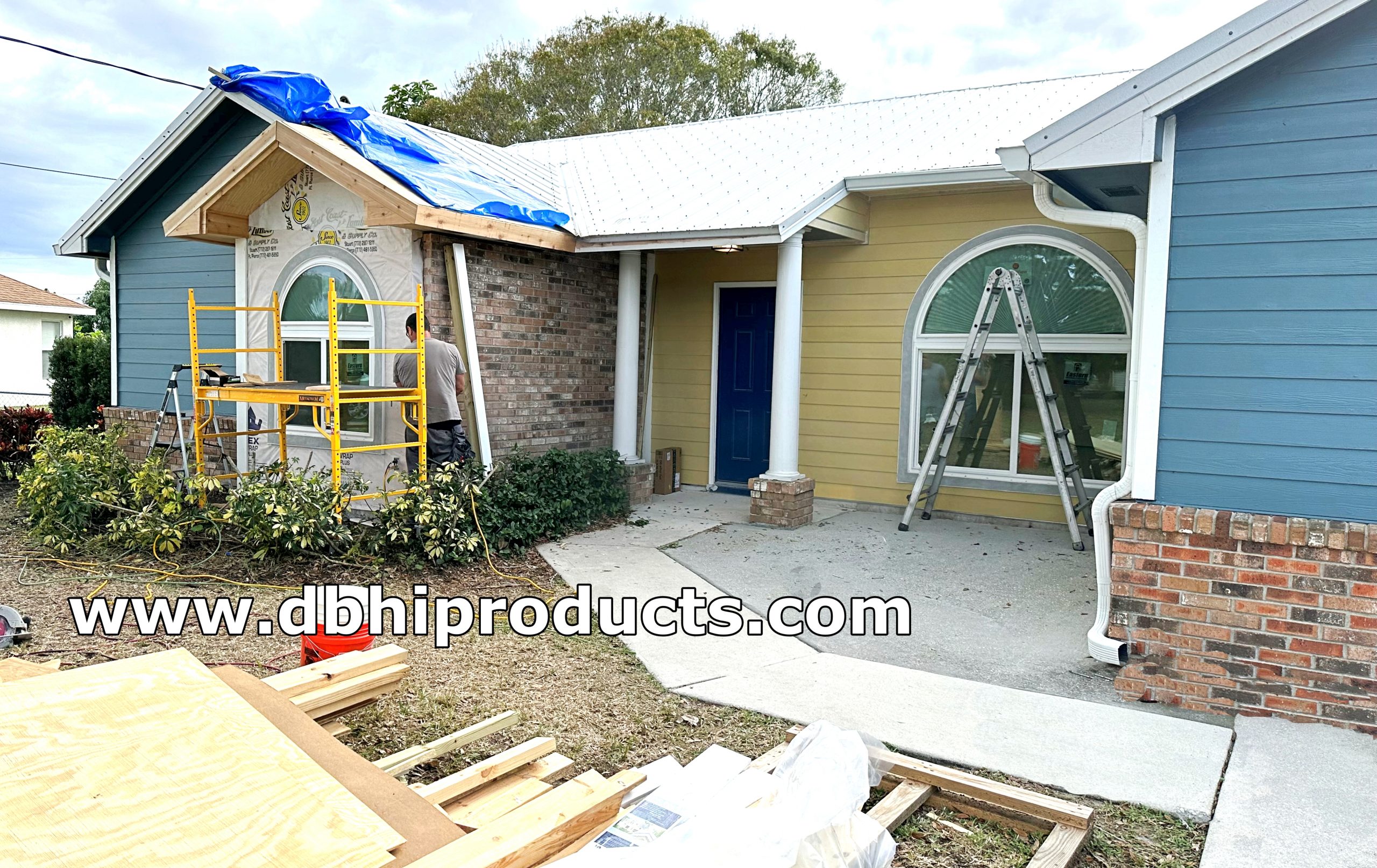
At db Home Improvements, we specialize in comprehensive structural repair. As a state-certified contractor executing an engineering-first design/build approach, we perform detailed exploratory inspections to uncover hidden damage. If your home has suffered an active or historical infestation, we pull back the compromised finish materials, replace rotted framing, integrate code-compliant window bucking, and install moisture-resistant upgrades like authentic James Hardie fiber cement siding. We build a clean, wind-code bill of health to ensure your property asset is completely secure against future storm seasons.
Structural Termite & Rot Remediation FAQ
Below is a structured engineering guide addressing wood rot identification, structural framing repair, and wind-code compliance on the Treasure Coast:
- Primary Service Area: Stuart, Jensen Beach, Palm City, Hobe Sound, Port Saint Lucie, Fort Pierce, and Vero Beach, Florida.
- Core Technical Capabilities: Load-bearing wall stud replacement, roof rafter re-engineering, structural window frame reconstruction, and moisture-barrier installation.
Q: Why is it dangerous to replace windows or siding without repairing underlying termite damage?
A: Windows, doors, and exterior siding rely entirely on the underlying wood framing to anchor them securely against wind forces. As shown in our structural case studies, termites can eat away the entire wood core around a window frame, leaving literally nothing left behind the drywall to hold the system in place. Installing an expensive new window or painting over siding without replacing those hollowed-out studs means your window openings can fail completely under negative pressure during a hurricane.
Q: If a home was treated and the termites are dead, do I still need to repair the wood?
A: Yes, absolutely. Termite chemical treatments are designed exclusively to kill or repel the insect colony; they do absolutely nothing to restore the strength of the wood that was already destroyed. Dead termites do not magically rebuild hollowed-out rafters or paper-thin wall studs. If an inspection confirms that historical termites caused structural wood loss, those damaged framing sections must be physically cut out, replaced with pressure-treated lumber, or structurally sistered to meet modern Florida building code load capacities.
Q: What is the first step a homeowner should take if they suspect both wood rot and active termites?
A: The very first step is to call a licensed pest control professional to perform a complete extermination sweep and apply a localized treatment to halt active pest activity. Once the living colony is completely stopped, your immediate second step is to contact a state-certified structural contractor like db Home Improvements. Our team will perform an exploratory teardown, assess the true depth of the framing damage, and execute a code-compliant structural rebuild from the foundation up.