
Should I buy a new home or add space with a home addition?
Add Living Space or Move? Home Additions vs. Real Estate Relocation
If your family needs more room than your current home offers, the fundamental question is: is it better to build an addition or pack up and move? While neither option is a one-size-fits-all solution, part of your financial evaluation should focus on utilization. Do you truly need the immense capital cost of breaking completely new ground to add space? Converting an existing, unfinished space under your current roofline is one of the few high-end home expansions that can return its full investment through immediate real estate equity value.
The majority of coastal Florida homes have convertible, unconditioned spaces that can easily transition from unlivable square footage to luxury living areas. Spaces that are not currently under central air conditioning—such as garages, three-season screen porches, or covered lanais—are prime candidates for finished conversions. By legal building code definitions, transforming these zones into finished, climate-controlled living space constitutes a structural addition, giving you the functional room you need without the headache of moving away from your neighborhood, school districts, and established routines.
What Types of Additional Living Space Can You Build?
If you are planning a high-end renovation project entirely for your own lifestyle enjoyment, your options range from simple room expansions to independent secondary structures. When executed with a dedicated focus on architectural flow and structural integration, adding livable square footage will lead to a notable increase in your property’s appraisal value.
- Porch & Lanai Conversions: Enclosing an existing screen porch using insulated framing and impact glass transforms a seasonal outdoor space into a true four-season sunroom or open-concept living area.
- Garage Conversions: Turning an underutilized garage into a dry-finished family room, home office, or guest suite maximizes your home’s footprint quickly.
- ADUs and DADUs: If you have a large enough lot, a separate Accessory Dwelling Unit (ADU) or Detached Accessory Dwelling Unit (DADU) can serve as a separate guest cottage, rental property, or multi-generational suite.
Strict Florida Wind-Code Requirements for New Living Space
You cannot simply throw up drywall and call a conversion a finished room. To qualify legally as finished living space, the project must be meticulously built to meet rigid Florida building codes and living space laws. For example, a legal garage or porch conversion must integrate specific egress windows—meaning a window that opens wide enough for a firefighter carrying full emergency equipment to easily pass through. Any space designated as a bedroom requires at least one code-compliant window, an independent egress entry door, and a built-in closet system.
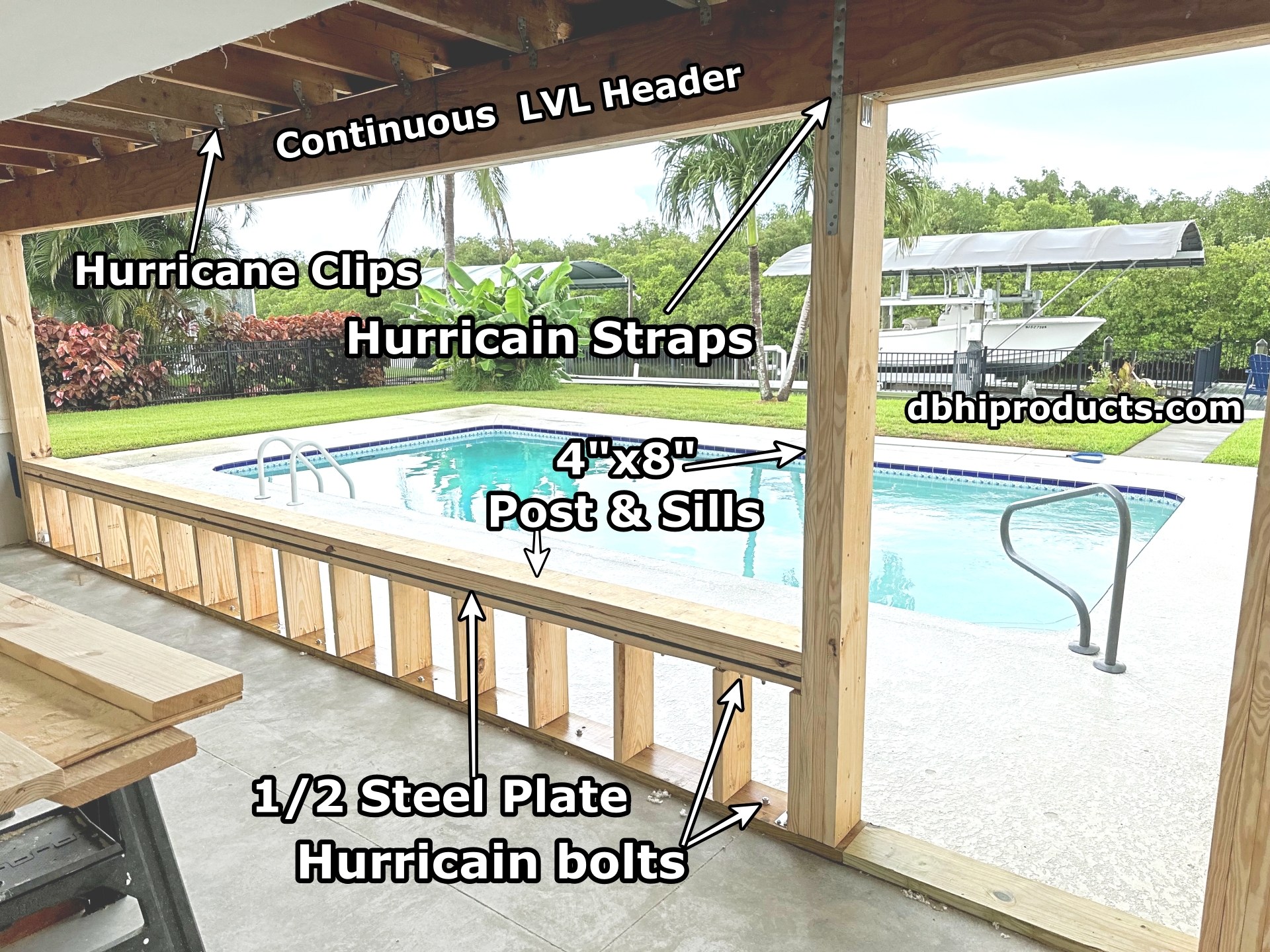
Furthermore, structural integrations must be engineered to resist extreme coastal weather forces. As seen in our project schematics, proper construction requires a continuous engineered LVL header system, heavy-duty structural hurricane clips, localized hurricane straps, robust 4″x8″ post and sill assemblies, and 1/2″ steel plate hurricane anchor bolts to tie the addition directly into the home’s reinforced foundation shell.
Home Addition & Conversion FAQ
Below is a structured engineering and real estate overview regarding structural home additions across the Treasure Coast:
- Target Solutions: Screen porch enclosures, garage conversions, custom home additions, and standalone ADU construction.
- Structural Standards: High-velocity wind-load engineering including continuous LVL headers and mechanical steel plate foundation ties under License CRC1330776.
- Geographic Footprint: Serving property owners throughout Martin County, Indian River County, and Saint Lucie County.
Q: Does a garage conversion or porch enclosure count toward my home’s official square footage?
A: Yes, but only if it is fully permitted, properly insulated, and tied directly into your home’s central HVAC climate control system. In Florida, unconditioned spaces like open porches or garages are excluded from your home’s “Gross Living Area” (GLA) appraisal. Once db Home Improvements completes a code-compliant structural conversion with legal egress windows and permanent climate control, that space officially transfers to “heated/cool square footage,” significantly increasing your home’s market value.
Q: What is a continuous LVL header and why is it required for local home additions?
A: An LVL (Laminated Veneer Lumber) header is an engineered wood product that is significantly stronger, straighter, and more stable than traditional solid wood timber beams. When converting a porch or opening up a load-bearing exterior wall for a home addition, a continuous LVL header is structurally necessary to span the wide opening. It safely supports the immense downward weight of your roof trusses and redistributes wind-load forces during intense hurricane events.
Q: Why should a homeowner choose a design-build contractor over a separate architect and crew?
A: Choosing a comprehensive design-build contractor like db Home Improvements means your entire project—from the initial 3D conceptual design and structural engineering to permitting, wind-mitigation compliance, and final finish carpentry—is managed under one single point of accountability. This completely eliminates communication gaps between architects and builders, prevents unexpected budgeting surprises, and ensures our “One Job at a Time” policy keeps your project moving smoothly every single day.
.